Affichage des articles dont le libellé est Dalai-Lama. Afficher tous les articles

mardi 31 octobre 2023

Feudalism, samaya and living in a tube

Vajra Bros. Sogyal Lakar and Namkhai Norbu

There appears no exception to the rule that, when the Mantrayāna becomes culturally important outside India, it is principally through the agency of official patronage, either aristocratic or imperial. Given these circumstances, it would be extraordinary if the military and political culture of early medieval India had not shaped esoteric institutions, doctrines, literature, rituals, and iconography, at least to some degree.

In fact, the degree is compelling, and central aspects of esoteric Buddhism came to embody directly and unequivocally the structure, aesthetics, and ideology of medieval Indian feudalism. In short, esoteric Buddhism is the form of medieval Buddhism that internalized, appropriated, reaffirmed, and rearranged the structures most closely associated with the systems of power relations, ritual authentication, aesthetics, gift-giving, clan associations, and sense of dominion that defined post-Gupta Indian politics
."

Fortunately we only need read the texts and examine the rituals to determine that Mantrayāna has built into it a sustaining metaphor, one that has been somewhat neglected by both traditional and modern scholars outside India. Yet it appears that the central and defining metaphor for mature esoteric Buddhism is that of an individual assuming kingship and exercising dominion. Thus the understanding of such terms as tantra in Buddhist India would invoke, first and foremost, the idea of hierarchical power acquired and exercised through a combination of ritual and metaphysical means. Based on this power, the varieties of understanding and of personal relationships become subsumed to the purposes of the person metaphorically becoming the overlord (rājādhirāja) or the universal ruler (cakravartin). It is the Buddhist version of the early medieval feudalization of divinity seen in the Purāņas and elsewhere, applied to the Buddhist path by its ritual enactment in which either monks or laity may participate.” (Ron Davidson, Indian Esoteric Buddhism, A Social History of the Tantric Movement, p.115, p. 121) 


In Leh, Ladakh, India on 1st August 2017, the Dalai-lama declared:
I feel some of these lama institutions have some sort of influence of the feudal system. That is outdated and must end - that feudal influence. Then eventually a lama institution creates lama politics [DL laughs heartily]. That’s very bad. An individual lama’s disgrace doesn’t matter, but it gives a very bad impression about a monastery or a monk. Very bad. So we must pay more attention. You should not say, “This is my guru. What guru says I must follow.” That’s totally wrong! Buddha himself mentioned, “You must examine my teaching”. Similarly if one particular lama says something, you examine whether this goes well according to Buddhaʻs teaching or according to the circumstances in society. Then you must follow. If the lama says something; if you investigate and it’s not proper, then you should not follow the lama’s teaching. Even Dalai Lama’s teaching; if you find some contradiction you should not follow my teaching.”
The outdated “feudal influence” must be ended, because it’s very bad. What has happened in 
regard after the Dalai-Lama’s declaration in 2017, in the aftermath of the Sogyal/Rigpa Affair? Has this “feudal influence” indeed ended, or is it still going on creating “very bad” vibes?

It is clear through the Dalai Lama’s explanation above that the feudal influence is linked with a certain attitude towards the guru: “What guru says I must follow”. This attitude comes forth from sets of tantric vows called “samaya”. Samaya is a sanskrit word that means “meeting” or “conjunction”. It is also found in a feudalistic context where it means "conventions" or "rules", e.g. conventions with vassals (sāmanta). 

Sam van Schaik[1] defines samaya as the embodiment of the wisdom being (jñānasattva) in a samaya being (samayasattva), serving as the support or the holder of the wisdom being, i.e. the deity that is inseparable from the Guru. The “conjunction” is realised through an empowerment (abhiṣeka), given by the teacher. And this “conjunction”, or sacramental bond, is maintained through the tantric vows of samaya. As long as the vows are kept, the samaya is “unbroken” and the “conjunction” maintained. In the opposite case, a Dunhuang manuscript specifies as follows:
If the samaya deteriorates, then while you live your complexion will deteriorate, your mind will become unclear, you will be subject to many illnesses and your wishes will go unfulfilled. Innumerable spirits and demons will wound you like an animal. When you die, your senses will become clouded, your tongue will stick [to your palate], you will smell unpleasant, and you will die vomiting blood. You will be escorted [from this life] by innumerable malicious demons.[2]


A lucky snake coming out through the upper end

Sam van Schaik adds:
This presentation of the samaya has continued through to the present day. Contemporary Tibetan lamas often like to compare someone who holds the samaya vows with a snake inside a tube of bamboo. For the snake, there are only two ways out of the tube; similarly for the samaya holder, there are only two results: enlightenment or the deepest hell.” (Limits of Transgression)
The highest glory or the deepest hell, respectively for those maintaining the samaya and those not maintaining or breaking it (dam sri). This is as close as Tibetan Buddhism gets to apostasy. Those who are considered “samaya breakers” need to be avoided (ostracism) by the other members of the social group, so as to not expose themselves to their bad influence.

The main vows that need to be maintained, and that are still currently taught as essential, apart from the the injunction to secrecy:
(i) to regard and respect the vajra master as if he were a buddha,
(ii) not to generate negative thoughts about, and to remain harmonious with, one’s vajra brothers and sisters
[3],”
Whatever happens in the Gurukula stays in the Gurukula. The Guru, who is inseparable from the deity, is like a Buddha for the students that received the empowerment. Since co-students received the same empowerment, they too were invested with the “wisdom being” by the same Guru. In order to maintain sacred outlook (dag snang) and sacrament, the sacramental vows (samaya) need to be upheld. If the Guru does seemingly reprehensible things, the students are not to consider them as such, because Lama knows (bla ma mkhyen no), and should not be criticized, since he is a Buddha and his activity is always awakened and skillful.
"So, how does pure perception [dag snang] work? As a Vajrayana student, if you look at Sogyal Rinpoche and think he’s overweight, that is an impure perception. To try to correct your impure perception you might then try visualizing him with the body of Tom Cruise, but that is still not pure perception. One of the Vajrayana’s infinite number of skilful methods that are used to deconstruct and dismantle impure perception, is to visualize Sogyal Rinpoche with a horse’s head, a thousand arms and four legs. But even this technique must ultimately be transcended in order fully to realize pure perception." Dzongsar Jamyang Khyentse, Guru and Student in the Vajrayana
Similarly, if co-students and co-initiates do seemingly reprehensible things, to entertain negative thoughts on their behalf would not be inductive to sacred outlook. These rules are added to the overall injunction to secrecy and sacred outlook. They constitute the tube in which a snake is stuck, until coming out at either end, the upper or the lower. In this case “stuck” specifically refers to the impossibility to speak out (or even think) freely about seemingly reprehensible things, done by the Guru or co-students. To speak out would imply disrespect towards the vajra master and negative thoughts projected onto co-students.

Practitioners of Atiyoga, the highest form of Dzogchen, have one single vow: to remain “in the sphere of the infinite supreme bliss” without discrimination, i.e. “to be beyond the concepts of maintaining or not maintaining a vow”. One’s Guru, who “naturally remains in the sphere of the infinite supreme bliss” can’t be evaluated and judged through lower sets of samaya vows and their injunctions and prohibitions “restraining certain kinds of behaviour”.

These are the rules for the empowered ones of a social group. The rules are different for those who would like to follow a teacher in his quality of a Guru. These searchers are invited to examine their future Guru most critically and for a long period, before they decide to go any further on the path to liberation, and to become their student, as well as a co-student of the other students of the Guru. A thorough investigation is quite impossible, though, because a Guru tends not to be equally accessible to non-students, and doesn’t act as a Guru during public gatherings, but rather as an ordinary spiritual teacher trying to reach out to the largest audience possible. Only when admitted into the inner circle, a future student could see and witness the Guru in everyday life behaving as a Guru “in the sphere of the infinite supreme bliss”. One can’t really inquire about a candidate Guru by asking future co-students about their opinion, because they are unable to criticize their Guru, because they are already stuck inside the tube. The same is true for asking other Gurus about their enlightened opinion, because they themselves are likely to be co-students of the candidate Guru. So, frankly, the whole preliminary Guru assessment is a lame argument that simply tries to put all the responsibility on a student.

The authors of Sex and Violence in Tibetan Buddhism[4] talk about “red robes mafia” and write the following about the publication of the Open letter by eight former students of Sogyal Lakar:
The corruption that had been festering under the carpet for decades was publicly exposed. The Buddhist version of omerta was blown wide open.”
The “festering under the carpet” is the direct result of the injunction of secrecy and sacred outlook regardless of the reality. Instead of producing an enlightened community, it produced corruption and abuse. Not only in Sogyal’s Rigpa but also in Trungpa’s Vajradhatu and Shambala. 

In his recent book Splendeurs et misères du bouddhisme tibétain, Olivier Raurich, a former French translator of Sogyal, quotes from a mail that Namkhai Norbu sent in the past as an answer to one of his students that asked him about Sogyal’s behaviour.
I received your letter about Sogyal Rinpoche. As you know, I am a Vajrayana practitioner, and in Vajrayana the most important thing is the samaya. Sogyal Rinpoche is my Vajra brother. Of course, I must also respect my Vajra brother for my own realisation. So I try to do everything to the best of my ability[5].” (translated from the French with DeepL, not the original English wording)
Olivier Raurich comments rightly so:
The most astounding passage is: "for my own realisation [spiritual fulfillment]"! He's afraid for his samaya, for his personal salvation, so he hides the truth... and admits it. A surprising attitude for a spiritual master! Matthieu Ricard and the Dalai Lama, for their part, leave the denunciation [“make public!”] to the disciple; they themselves refrain from making any criticism that might damage their samaya. This shows the profound alienation to which the entire community is subjected by the almost medieval belief system of Tibetan Buddhism.[6]
Medieval or feudal. Tibetan and Western Gurus can’t speak out about corruption and abuse by their colleagues, because this would go against their vows of samaya, “the most important thing” in Vajrayāna according to Namkhai Norbu, since one’s own spiritual fulfillment depends on it. Remember the snake in the tube and the choice between the greatest glory and the deepest hell. Even heroic bodhisattvas always go for the glory. When will we see a tantric messiah ready to take on all the broken samaya of the world and free sentient initiates from all their sins?  

This email from Namkhai Norbu to a student is not about a Guru humble bragging, but rather a Guru gaslighting his student. Namkhai Norbu is not talking about his own obligations as a Vajrayana practitioner, but wants to indirectly remind his students of their obligations. As a Vajrayana practitioner a student ought to scrupulously respect the same samaya vows as Namkhai Norbu, and even more so. Namkhai Norbu is showing himself to scrupulously respect samaya towards a Vajra brother, Sogyal Lakar, not to mention Namkhai Norbu’s respect for his own guru. For the sake of the students’ own realisation, or in order to avoid the deepest hell, they ought to mind their samaya regarding secrecy and towards their Guru and Vajra brothers ... and sisters.

The Dalai-lama may be doing the same by asking students, who claim they were abused, to denounce their Gurus themselves. Why? Because he too may be bound by samaya. And so are the members of the inner circle of a Guru (Vajra brothers and sisters), who often are senior teachers and hold positions of responsibility in Buddhist centers and/or in national or transnational Buddhist Unions. They are all bound by samaya, “the most important thing” in Vajrayāna. 

Showing oneself openly to not follow samaya is to disqualify oneself as a Vajrayana practitioner. I think if we wanted to find some sort of “feudal influence”, looking into samayait would be a good place to start. How would “we” end that feudal influence”? That’s for Vajrayāna practitioners and Gurus to decide. Nothing has happened since 2017. Or rather, it, the secrecy, the omerta, the silence has never ceased to happen.

This article has also been published on Open Buddhism.

***

[1]If these three samaya do not deteriorate, then your body, speech and mind will be transformed into the vajra nature. While you live your hopes will be fulfilled, while at the time of death you will have a clear mind, untroubled by the sickness of the defilements. [Your body] will have a pleasant odour, you will not forget the instructions, and the deities will come as escorts.”
Van Schaik, Sam. (2010). ‘The Limits of Transgression: The Samaya Vows of Mahāyoga‘. In Matthew Kapstein & Sam Van Schaik (Eds.), Esoteric Buddhism at Dunhuang: Rites and Teachings for This Life and Beyond (pp. 61-83). Leiden: Brill. Quoted from a Tibetan manuscript from the library cave at Dunhuang IOL Tib J 718 r. 11.

[2] Ibid. Quoted from a Tibetan manuscript from the library cave at Dunhuang IOL Tib J 718 r.12.

[3] Dunhuang manuscripts. Van Schaik, p. 68

[4] Finnigan, Mary & Rob Hogendoorn. (2021). Sex and Violence in Tibetan Buddhism: The Rise and Fall of Sogyal Rinpoche (Revised and Updated).. Portland: Jorvik Press, p. 93.

[5]J’ai reçu votre lettre au sujet de Sogyal Rinpoché. Comme vous le savez, je suis un pratiquant du Vajrayana, et dans le Vajrayana le plus important est la samaya. Sogyal Rinpoché est mon frère du Vajra. Bien sûr, je dois aussi respecter mon frère du Vajra pour ma propre réalisation. Ainsi, j’essaye de tout faire au mieux.”

[6]Le passage le plus renversant est : « pour ma propre réalisation [accomplissement spirituel] »! Il a peur pour sa samaya, pour son salut personnel, donc il tait la vérité... et il l’avoue. Étonnante attitude pour un maître spirituel ! Matthieu Ricard et le Dalaï Lama laissent quant à eux le soin de la dénonciation au disciple, ils s’abstiennent de porter eux-mêmes une critique qui risquerait d’endommager leur samaya. On voit là l’aliénation profonde que fait subir à toute la communauté le système de croyances quasi moyenâgeux du bouddhisme tibétain.” Splendeurs et misères du bouddhisme tibétain

lundi 2 octobre 2023

La recette transmigratrice secrète du deuxième Dalai Lama

Le lama blanc, bd de Jodorowsky & Bess, Les Humanoïdes Associés

Le deuxième Dalaï-lama, Gendun Gyatso (1476-1542), avait un lien avec la lignée Shangpa du côté paternel.
Sangyé Tönpa (XIII-ème)
Tsangma Shangtön (1234-1309)
Müchen Gyeltsen Pelsang (XIII-XIVème)
Müchen Namkhé Neljor (XIVème) > Tsongkhapa
Phagö Künga Zangpo (XIII-XIVème) arrière-grand-père paternel
Dönyö Gyeltsen (XIV-XVème) grand-père paternel
Sektön Künga Gyeltsen (1432-1481) père
Gendun Gyatso (1476-1542)
Gendun Gyatso reçut la transmission Shangpa de l’époque de son père Künga Gyeltsen. Dans l’oeuvre complète du deuxième Dalaï-lama (rGyal dbang 'dun rgya mtsho'i gsung 'bum, 6 volumes[1]) on trouve plusieurs œuvres sur les instructions Shangpa, notamment un commentaire sur les Six yogas de Niguma[2]. Je m’intéresse ici plus particulièrement à la partie qui concerne le transfert (‘pho ba). Selon Gendun Gyatso, et d’autres, le locus classicus du transfert bouddhiste ésotérique (utkrānti, ’pho ba) serait le Sampuṭa Tantra (partie III), un tantra explicatif commun aux tantras de Hevajra et de Cakrasaṃvara, “le fondement de tous les tantras”, attribué au roi Indrabhūti. La partie III montre bien les correspondances micro-/macrocosmiques, avec les 24 lieux dans le corps du yogi. C’est un sujet qui passionne le Tibet au XIVème siècle. Gendun Gyatso mentionne d’autres tantras donnant également des informations sur le transfert : le Tantra de la Vajraḍākinī (dPal rdo rje mkha' 'gro gsang ba'i rgyud kyi rgyal po ?), le Saṃvarodaya Tantra[3], le Catuḥpīṭha[4], le Caturyoginīsampuṭa (rNal 'byor ma bzhi'i kha sbyor gyi rgyud), et les instructions de Mañjuśrī ('Jam dpal zhal lung), auxquels Gendun Gyatso ajoute encore le 'Pho ba'i rnam bshad chen mo de Je Tsongkhapa.

A l’époque de Gendun Gyatso (XV-XVIème), il existe quatre types de transfert :
Le transfert dans l’ainsité du dharmakāya (chos sku de bzhin nyid kyi 'pho ba)
Le transfert de la grâce du guru (byin rlabs bla ma'i 'pho ba)
Le transfert de la dyade de la divinité tutélaire (zung 'jug yi dam gyi 'pho ba)
Le transfert infaillible de la khecarī (‘chug med mkha' spyod kyi 'pho ba)
Comme le dernier transfert est “le plus pratiqué par les lamas”, c’est celui-là que Gendun Gyatso explique[5]. C’est la pratique attribuée à Niguma.
On médite ensuite sur la Vajra Yogini au-dessus de sa tête et on la prie. La visualisation se déroule comme précédemment. Les airs remontent par le bas et l'on prononce la lettre Hik. L'esprit, sous la forme d'une lettre blanche A, remonte le canal central et sort par l'ouverture de Brahma. Il pénètre dans Vajra Yogini par le passage de son sexe, qui est de couleur rouge. L'A arrive à son cœur et s'y dissout. Méditez pour que l'esprit devienne un avec la sagesse de la félicité et du vide de Vajra Yogini, inséparable par nature du gourou racine. Lorsque nous méditons de cette manière, nous remplissons les quatre points (gnad)[6] de l'entraînement au transfert[7].”
C’est le transfert “le plus pratiqué par les lamas” à l’époque de Gendun Gyatso. Nous avons vu qu’à partir du XIVème siècle, la destination du transfert devient Amitābha et sa terre pure Sukhāvatī. Le deuxième Dalai-lama Gendun Gyatso mentionne encore un transfert dit “par la force de l’intention” ('dun stobs kyis 'pho ba), qui consiste en l’application de “substances mystiques” (rdzas) au sommet de la tête, et qui permet au yogi (mâle) de transférer sa conscience où il le veut. C’est une instruction orale sur laquelle le deuxième Dalai-lama ne souhaite pas s’étendre, mais il donne néanmoins la recette pour cette onction.
Ses propres fluides et ceux d'une femme
conduisent l'énergie et l'esprit vers le haut.
Le sel ouvre l'embouchure du canal
Et le cerveau [humain] protège des obstacles
.[8]
Les fluides sont le sperme bindu bīja” du yogi (mâle) qui veut faire le transfert, le “fluide” bindu, donc rajas d’une femme, du sel, et du cerveau humain. Disponibles chez votre fournisseur habituel de produits alchimiques.
Comme indiqué ici, on prend une petite quantité de chacune de ces substances, on les place dans sa paume et on récite de nombreux mantras. La substance est ensuite appliquée à l'ouverture de Brahma. C'est ce qu'ont enseigné les gourous d'autrefois.[9]
Pour des raisons biologiques, cette méthode alchimique du “transfert par la force de l’intention” ne semble pas accessible aux yogis femmes. Elle permet néanmoins de passer outre le transfert pneumatique.
Dans cette méthode, il n'y a pas besoin de transfert pneumatique. Cependant, même si cette méthode permet de renaître dans une Terre Pure, il n'y a aucun moyen de déterminer la Terre Pure spécifique dans laquelle on va renaître.[10]
La dernière phrase semble être un commentaire ajouté par Glenn Mullin. Le yogi qui ne veut pas aller dans le khecara ou une terre pure, doit utiliser le transfert pneumatique, et diriger la conscience vers l’orifice du corps lui permettant de naître dans le monde correspondant. Selon le Sampuṭa Tantra (partie III) :
8.68 [Le Bienheureux dit :]

"Écoutez la bonne méthode,
sur laquelle il faut s'appuyer au moment de la disparition.
Lorsque le chemin est juste, on atteindra un destin agréable ;
Le mauvais chemin conduit à des formes d'existence défavorables.

8.69 "Les neuf portes sont spécifiées comme suit
La "goutte" entre les sourcils, le nombril,
La fontanelle au-dessus, les yeux, les narines et ainsi de suite, les oreilles,
et les portes de passage de l'eau et d'évacuation.

8.70 "La porte du nombril mène au royaume du désir des dieux.
En sortant par la 'goutte', on entre dans le royaume de la forme.
La porte 'au-dessus' mène à des destins encore plus élevés.
Ces trois portes ont été proclamées comme menant à des destinées supérieures.

8.71 "On entre dans le royaume des yakṣas par les narines ;
Celui des siddhas divins, par les oreilles.
La conscience qui s'échappe par les yeux
Se dirige vers le royaume des humains.

8.72 "La porte de l'existence, la bouche, mène au royaume des fantômes affamés,
tandis que le passage urinaire mène au royaume des animaux.
Lorsque la porte est l'anus, le destin est l'enfer avec ses huit divisions.
Ainsi sont décrits, ô fils de noble famille, les passages vers les différentes existences
.[11]
Il convient donc de bloquer les orifices des destins non souhaités, et de faire le transfert par l’orifice correspondant, qu’on laissera ouvert, afin de pneumatiquement éjecter la conscience. Bon voyage !

Henri Doré, Manuel des superstitions chinoises (Chang-Hai, 1926) 

***

[1] Vol. 2, rJe btsun thams cad mkhyen pa'i gsung 'bum thor bu las bla ma'i rnal 'byor/ bla ma mchod pa/ khrid kyi skor dang bcas pa

[2] Zab lam ni gu'i chos drug gi khrid yig ye shes mkha' 'gro'i zhal gyi lung, traduit en anglais par Glenn Mullin dans Selected Works of the Dalai Lama II, The Tantric Yogas of Sister Niguma, Snow Lion (1985).

[3] Qui contient la fameuse citation, dont seuls les deux premiers vers se trouvent dans la version en sanskrit :
The guru is the Buddha,
The guru is the Dharma,
Likewise the guru is the Sangha too
The creator of everything is the guru
The guru is the glorious Vajradhara [or heruka]
.”

[4] Śrī Caturpīṭha Mahāyoginī Tantrarāja Nāma (rnal 'byor ma'i rgyud kyi rgyal po chen po dpal gdan bzhi pa zhes bya ba)

[5] ‘Phyugs med mkha' spyod kyi 'pho ba ste bzhi bshad kyang bla ma rnams kyi phyag len 'phyugs med mkha' spyod kyi 'pho ba la mdzad pas de bshad na. La pratique est ici orthographié ‘phyugs med.

[6] "Method, time, form, and object". Thabs dang dus dang lus dang ni// dmigs pa'i gnad du shes par bya//

[7] Traduction Deepl de la traduction anglaise de Glenn Mullin.

One then meditates on and prays to the Vajra Yogini above one’s head. The visualization proceeds as before. The airs push up from below and one sounds the letter hik. One’s mind in the form of a white letter ah shoots up the central channel and out the Brahma aperture. It enters Vajra Yogini via the passage of her sexual organ, which is red in color. The ah comes to her heart and dissolves into it. Meditate that the mind becomes one with the wisdom of bliss and void of Vajra Yogini, inseparable in nature from the root guru. When we meditate in this way we fulfill all four points of the transference training.”

En tibétain : de nas sbyi bor rje btsun ma bsgoms pa la gsol ba drag tu gdab/ / dmigs pa sngar ltar byas 'og rlung drag tu 'then zhing hig brjod pas rang sems a dkar por gsal ba de tshangs bug nas rgyangs kyis 'thon/ rje btsun ma'i gsang gnas dmar sing nge bar zhugs/ thugs kar thim pas bla ma dang yi dam dbyer med kyi thugs bde stong gi ye shes dang rang gi sems dbyer med du gyur par bsam mo// de ltar bsgoms pas 'pho ba bzhi ga'i gnad tshang bar 'gyur la/

[8] Glenn Mullin : “One’s own and a female’s fluids
Lead energy and mind upward.
Salt opens the mouth of the channel
And brain guards against hindrances
.”

En tibétain :

rdzas kyi'ang 'pho ba byed na/ (ailleurs rdzas kyi' nga 'pho ba byed na. Zhi byed dang gcod yul sogs gdams ngag thor bu'i chos skor)

rang dang bud med thig le yis//
rlung sems gnyis po yar la 'dren//
tsha las rtsa kha 'byed par byed//
mi yi klad pas bar chad srung //

[9] Glenn Mullin : “As indicated here, one takes a small quantity of each of these substances, places them in one’s palm and recites many mantras. The substance is then applied to the Brahma aperture. This has been taught by the gurus of old.”

En tibétain :

zhes bshad pas rdzas bzhi po de lag mthil du mnyes la sngags mang du btab ste spyi gtsug tu byug ces bla ma rnams gsung la/

[10] Glenn Mullin : “In it there is no need for transference by the power of the airs. However, even though this method produces rebirth in a Pure Land, there is no way to determine the specific Pure Land into which one will take rebirth.”En tibétain : rlung so dgu stobs kyis 'pho ba la ni mi dgos so.

[11] 8.68 [The Blessed One said:]
“Listen about the proper method,
Which is to be relied upon at the time of passing away.
When the path is right, one will reach a pleasant destiny;
The wrong path will lead to unfavorable forms of existence.

8.69 “The nine gates are specified as
The ‘drop’ between the eyebrows, the navel,
The fontanelle above, the eyes, the nostrils and so forth, the ears,
And the gates for passing water and for evacuation.

8.70 “The gate at the navel leads to the gods’ realm of desire.
By leaving through the ‘drop,’ one will enter the realm of form.
The ‘above’ gate leads to still higher destinies.
These three gates have been proclaimed as leading to higher destinies.

8.71 “The realm of yakṣas is entered through the nostrils;
That of the divine siddhas, through the ears.
The consciousness that escapes through the eyes
Will proceed to the realm of humans.

8.72 “The gate of existence, the mouth, leads to the realm of hungry ghosts,
While the urinary passage leads to the animal realm.
When the gate is the anus, the destiny is hell with its eight divisions.
So are described, O sons of noble family, the passages into different existences. 

Site 84.000, The Foundation of All Tantras, the Great Sovereign Compendium “Emergence from Sampuṭa” Toh 381, Translated by the Dharmachakra Translation Committee, current version 2023.


dimanche 23 avril 2023

Ma réaction à l'article de Raphaël Liogier dans Le Monde

Raphaël Liogier, sociologue, philosophe, et professeur des universités à Science Po à Aix-enProvence a publié sa réaction à “l’affaire de ‘la langue du dalaï-lama’ “ dans le Monde du 23 avril 2023 sous le titre “La perte du sens de la gravité dans ‘l’affaire de la langue’ du dalaï-lama est choquante et impudique”.

Je suis globalement d’accord avec les quatre remarques de l’auteur, mais avec parfois quelques nuances importantes. Mes réserves quant au Dalai-lama vont plus loin que celles de l’auteur.

Comme l’auteur ne semble pas tout connaître du contexte de l’événement à Dharamsala, je veux apporter quelques précisions au déroulement de la rencontre avec le garçon. Celui-ci est fils de la directrice de la M3M Foundation, Dr. Payal Kanodia, et le petit-fils du PDG et fondateur du M3M Group, Basant Bansal, tous présents à l’événement, puisqu’il s’agissait d’une rencontre organisée avec 120 diplômés d’un des projets de la fondation. Au début de la rencontre, le garçon avait été commissionné par sa mère, Dr. Payal Kanodia, pour offrir un cadeau au Dalai-lama. L’incident "viral" s’était produit à un autre moment, à la fin de l’événement. Il ne s’agit donc pas d’un garçon dont le Dalai-lama serait “l’idole”[1], et qu’il rencontra comme l'aboutissement d'un rêve. L’acte du Dalai-lama était en effet au minimum un acte inapproprié, et il s'en est d’ailleurs excusé.

Pour la première remarque, la viralité remplace la réflexivité, j’ajouterai que cela peut être vrai aussi pour des réactions positives, qui elles aussi peuvent révéler un manque de réflexivité parmi les internautes.

La deuxième remarque, que la viralité révèle le manque de réflexivité des internautes, et qu’elle produit ainsi de la désinformation intentionnelle ou non, peut s’appliquer également à la viralité de réactions positives. C’est le manque de réflexivité qui semble être le dénominateur commun des réactions virales, négatives comme positives. Dans ce cas précis, en dehors des réactions plus pondérées, la grande majorité des réactions étaient sans doute, en effet, le résultat de campagnes de désinformation et de manipulation.

Le Dalai-lama est connu pour ses facéties, mais celle à laquelle réfère l’auteur n’a cependant pas été présentée correctement.
Celui-ci a ainsi déclaré à diverses reprises, a ainsi déclaré à diverses reprises, afin d’agacer les autorités de Pékin, qu’il pourrait bien se réincarner en « blonde » ; autrement dit, non seulement en femme, mais en Occidentale.
Face à Karl Stefanovic de Today (Autsralie) le 14 juin 2013 

Les fois[2] où le Dalai-lama avait répondu qu’il pouvait se réincarner “en femme”, pas en blonde, ou en “blonde”, il avait précisé qu’elle devait avoir un beau visage. Le Dalai-lama avait expliqué au journaliste Karl Stefonovic qu’il y avait 8 signes requis, et qu’un des signes était la beauté extérieure. Il n’y avait aucune mention dans les deux interviews d’une “blonde” (et donc racisée, ou occidentale), ni de référence couverte ou ouverte aux autorités de Pékin.

Face à Clive Myrie de la BBC, le 21 septembre 2015 
Une blague aux airs machistes qui prouve le décalage entre l’octogénaire et les exigences, légitimes, de notre époque. Mais en ne retenant que ça, c’est le contexte politique qui n’est plus saisi par les internautes : le dalaï-lama affirmait que sa réincarnation ne pourrait pas être trouvée sur le territoire contrôlé par la Chine.”

Face à Rajini Vaidyanathan de la BBC, le 27 juin 2019

En pointant vers son propre visage, et en précisant que toutefois le visage de la future Dalai-lama devait être beau, le Dalai-lama ne faisait aucune référence à aucun territoire spécifique.

Pas de désaccord sur le troisième et le quatrième argument. Par rapport à “l’égalisation des scandales”, j’ajouterai au fait “que des millions de femmes continuent à mourir sous les coups des hommes” partout dans le monde, qu’il y a eu aussi et qu’il y a toujours, comme dans d’autres religions (et sans se limiter aux seules religions), des cas d’abus d’adultes et d’enfants dans le cadre du bouddhisme en Occident comme ailleurs, sans aucune reconnaissance et dédommagement des victimes, et sans que des mesures soient prises au nom d’un bouddhisme global ou autre, pour éviter que ces abus se reproduisent et pour assainir le bouddhisme.


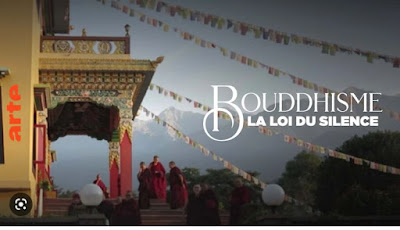
Je vous recommande à ce titre de revoir le documentaire d’Arte "Bouddhisme, la loi du silence", en français ou en anglais sous-titré.

***


[1]Un enfant y suit une conférence du grand lama et fait part de son rêve de s’approcher de lui. Ce dernier lui fait signe de venir sur l’estrade. L’enfant accourt, le dalaï-lama le prend dans ses bras et le taquine. Tandis qu’il veut rester plus longtemps auprès de son idole, le dalaï-lama lui dit en sortant la langue : « Suce-moi la langue. »

[2] Face à Karl Stefanovic, dans le programme de télé australien “Wake up with Karl and Sarah today”, le 14 juin 2013. Une autre fois face au journaliste Clive Myrie de la BBC le 21 septembre 2015. Et puis une dernière fois, face au journaliste de la BBC, Rajini Vaidyanathan, le 27 juin 2019. Suite à cette dernière entrevue, il y eut un article dans le Huffington Post (Sep 24, 2015, Updated Jun 28, 2019).

jeudi 7 octobre 2021

Diffi.Cult


I discovered Tenzin Peljor’s blog (buddhism-controversy-blog, Diffi.Cult) in the aftermath of the Sogyal Lakar/Rigpa affair in summer 2017, as one of the websites where (ex-)students having difficulties with the cultish aspects of the communities they were involved in could express their concerns and exchange with others.

Tenzin Peljor being a fully ordained Gelukpa monk (by the Dalaï-Lama), criticism of Tibetan Buddhism and of its teachers is rather limited, in the sense that the consensus of the publications, exchanges and moderation seems to be one going into the direction of furthering the relations with Tibetan Buddhism and its teachers on an as-is basis, sometimes even with teachers that allegedly abused students, and/or with their continuing communities.
Realising gradually that Tibetan Buddhism and Tibetan culture are extremely complex and have far more difficult issues than the Shugden controversy, a year after I posted an critical post about the silence of Tibetan Buddhists with respect to the abuse allegations against Sogyal Lakar in March 2012, Sogyal Rinpoche and the Silence of the Tibetan Buddhist Community and the Dalai Lama, I renamed this blog in July 2013 to http://buddhism-controversy-blog.com and the title “Tibetan Buddhism – Struggling With Diffi·Cult Issues”.” (Diffi.Cult, About section)
One generally shared approach of contributors to Diffi.Cult could be resumed under the motto “separate the artist from his/her work”, i.e. the work can be the work of genius, but the artist may be clad with issues. One could add to this motto “separate the leader from his/her organisation”. The leader may be compromised, but his/her organisation can continue just like before, with some minor changes, or perhaps a deontology charter and internal psychological help providers. Another fixed idea seems to be that one ought to consider both the bad and good things a teacher does/did, even if the bad things include the recurrent abuse of students. Nobody is perfect. Some students may have been abused, but many other students (a "silent majority"?) perhaps found “benefit” in the teachings of compromised teachers. A concrete consequence of the latter idea is that when discussing compromised teachers, one should not forget they may have benefited many.

When I became aware of this blog (end 2017), there were sometimes vivid discussions, in which sometimes victims/survivors participated. Some of them really couldn’t (trauma triggers) / didn’t want to continue with Tibetan Buddhism, thereby going against the general consensus (see above). These voices seem to have died out in the more recent years. The authors of Sex and Violence in Tibetan Buddhism (Mary Finnigan and Rob Hogendoorn) also sometimes participated in these discussions, but they too have disappeared after often heated exchanges. Once the more critical voices of TB had left this forum, the general consensus thickened. The only heated discussions now are with let’s call them loyalist TB’s, who may blame Tenzin Peljor and guest writer Joanne Clark for these topics to be even discussed (breaking the silence) and for allowing allegations against their Tibetan teachers to be put forward and to get attention.

The Diffi.Cult website seemed to want to take a sort of middle position between two fires (critical and loyalist). With the disappearance of the more critical voices and the multiplication of allegations against Tibetan teachers, sometimes major ones, the fire now merely seems to come from the loyalist side. If Diffi.Cult wants to stick to a middle position, the repeated loyalist attacks could have as a result to pull the general consensus a bit more to the loyalist side, in the absence of the once more critical voices.

It seems to me that this is what’s happening with the publication of a guest post by Joanne Clark, “A Disheartening Article: Stuart Lachs & Rob Hogendoorn on the Dalai Lama”. The two authors of this critical article on the Dalaï-Lama, which both Joanne Clark and Tenzin Peljor admit not having read in its entirety[1], are reproved for not having considered “any spiritual dimension that might have informed the Dalai Lama’s motivations and actions[2]” in their article, even though his spiritual qualities are well known and very often repeated in the media without the negative counterparts. No objection there it seems. There also is such a thing as a reading grid, to make certain things more apparent that would otherwise be left out.  

Tenzin Peljor writes :
Spiritual values, which guide the Dalai Lama’s verbal and bodily actions, are easily overlooked and cannot be seen and understood by people who look on him from a merely mundane-political perspective. Looking through a black-and-white ideological lens on a complex and very colourful figure like the Dalai Lama can only taint one’s examinations and conclusions.”
The Dalaï-lama is both an individual (Tenzin Gyamtso) and an institution with an Office. The only Dalaï-Lama most Westerners, including Western Tibetan Buddhists, have access to is the Dalaï-Lama as the institution, who may choose to communicate in very personal pleasant and human ways, like any celebrity. We don’t know Tenzin Gyamtso’s spiritual dimension behind the motivations and actions of the Dalaï-Lama, and we don’t have to know. But he seems like a warm person.

All we can know and can go by are his words, actions … and also the things the Dalaï-Lama keeps silent on and doesn’t act upon.

Joanne Clark takes issue with the authors’ coldish treatment of the Dalaï-Lamas siding with Thatcher and Bush against Augusto Pinochet’s extradition for trial on charges of human rights violations, in which the genuine compassion of the individual behind the Dalaï-lama[3] may have been overlooked. I wouldn’t be surprised that even among those who wanted Pinochet judged for his crimes some may also have had a “spiritual dimension” and felt compassion for the dictator, but that didn’t stop them from claiming justice for the victims. If Pinochet deserved our compassion in action, what other criminals and dictators deserve for the world to speak out for them and to not trial them? If one wants to claim compassion for one individual, albeit a dictator, why not claim compassion and forgiveness for all? What made the case of Pinochet so special?

In the discussion that follows the guest post, Joanne Clark (an ex-disciple of Sogyal Lakar) goes back to the Sogyal Lakar case, and specifically to Mary Finnegan’s and Rob Hogendoorn’s book Sex and Violence in Tibetan Buddhism, in order to set some things straight in order “to keep up a spirit of staying close to facts and truth as we know them”. 

I will spare you the details, but my point here is that if one wants victims and survivors of Buddhist cults or cultish organisations to speak out, it would be good to listen to what they have to say, without distributing compassion points to some and decredibilising others. The same goes for well informed and researched articles with a critical reading grid.

The head of the Sauvé report on abuse by the French Catholic Church talked about the “cruel indifference” of the Church until 2000. The report had been commissioned by the French conference of bishops (not the pope or a pope, but men of good will one could say) three years ago. No matter whether it was out of “compassion” or the Church’s own interest. The damning report is there and hopefully it will lead to concrete measures. The Dalaï-Lama, filled to the brim with compassion (who knows), didn’t take any action regarding abuse (East and West) in Tibetan Buddhism. Loyalist Buddhists like to point out this is because of his lack of power[4], that the Dalaï-Lama is not a pope, that the abuse of Western students takes merely place in the West and is therefore something for Westerners to deal with. In that case, who is to deal with the abuse taking place in and outside TB monasteries by members of the Sangha in India and elsewhere?

In spite of not being the Tibetan Buddhist pope, the Dalaï-Lama met in 2018 with a delegation of Western victims/survivors and promised them he would put the topic on the agenda of the next meeting between Tibetan religious leaders. For lack of a pope, a decision by all Tibetan religious leaders would have looked pretty hopeful. But the meeting was postponed and even though other meetings did take place (Covid helping), this topic has sine dei disappeared from the agenda, regardless of the Dalaï-Lama’s or the other Tibetan hierarchs’ spiritual dimension.

I am not sure that criticizing those who criticize the Dalaï-Lama and Tibetan Buddhism (including for their previous works on Sogyal...)  and trying to find excuses for the lack of action regarding abuse (“cruel indifference”) will help making victims and survivors feel safe and understood and more critical voices feel welcome on Diffi.Cult.

For the thorough research (whether one likes the outcome or not) by Stuart Lachs & Rob Hogendoorn: 

For disheartening blogs (in French) :

Tentative de clarification 30 septembre 2018
Ce n'est pas une coutume tibétaine... 27 avril 2021
"C'est dur d'être aimé par les cons" 3 décembre 2020
Les racines néolibérales de la compassiologie 10 décembre 2020   

MàJ 24102021 Recommended read: Hostile Takeover by Rob Hogendoorn.
 
***

[1]I have a confession. I have not investigated this entire article line by line, nor checked all the sources, primarily because most of them are very difficult to access. Doing so would demand a great investment of time and stamina—and I have seen enough distortion in the sourcing and enough of the non-contextual approach to their evidence and argument to distrust the authors’ conclusions.’ Joanne Clark
'So far I didn’t read the article by Rob and Stuart in all its details. (…) After having glanced through Stuart’s and Rob’s article, I agree with Joanne, the complex spiritual and cultural motivations, intentions and values the Dalai Lama holds and is committed to as a Buddhist monk and as a deep admirer and follower of the altruistic Bodhisattva path – which guide his mental, verbal and physical actions – seem to have been ignored in this article.’ Tenzin Peljor

[2]Any spiritual dimension that might have informed the Dalai Lama’s motivations and actions are sadly not considered in this article. That is a big missing piece in their case in my opinion.”

[3] "in the Pinochet case, as an individual, now old," it might be best to forgive him, the Nobel laureate told reporters in Santiago. "I think forgiveness is important, but forgiveness does not mean to forget about what happened." CBC News

[4]Anyone who has followed the Dalai Lama and understands the history and culture and religious significance of Tibetan lineages and power dynamics would know that such a provocative suggestion (particularly in 1989)—asking if he would “accept a position as head of all the lineages, like a pope”—would likely trigger a strong reaction from him, a need to quickly quell such a suggestion. His Holiness’ response must be viewed within that context, with that powerful nuance—which is a different perspective than if we thought the context was the much milder, non-provocative one created by Lachs and Hogendoorn.”

dimanche 27 octobre 2019

La feuille de route bouddhiste du Dalaï-Lama


Les échanges entre le Dalaï-Lama et des étudiants (college students) de l’Inde et du Bhoutan étaient intéressants de plusieurs points de vue. L’ensemble peut constituer une sorte de feuille de route pour les bouddhistes tibétains asiatiques et tibétains en exil. J’ai l’impression que le Dalaï-Lama table sur un séjour prolongé en Inde, sans doute à long terme, de la communauté tibétaine en exil. En Inde, un grand pays démocratique, où de multiples religions vivent dans une paix relative (22:59 et 27:42), il y a de la place pour le bouddhisme (tibétain). Le président Modi avait d’ailleurs appelé l’Inde, le pays du bouddhisme. Je mets tibétain entre parenthèses, car le DL propose aux étudiants de devenir des bouddhistes du XXIème siècle. Être un bouddhiste du XXIème siècle est possible pour les bouddhistes tibétains, si ceux-ci se tournent plutôt vers le bouddhisme de Nalanda ou tradition de Nalanda. Le bouddhisme de Nalanda, basé sur l’inférence et la logique, est une sorte de science de l’esprit qui se laisserait bien combiner avec la science moderne (59:03).

Le maître bouddhiste Haribhadra (seng nge bzang po 56:19) fait une distinction entre ceux qui suivent par la foi et ceux qui suivent par la raison ou l’intelligence. Les bouddhistes d’aujourd’hui doivent être des suiveurs de l’intelligence. Le DL ajoute qu’il ne croit en pas en la cosmographie du mont Merou avec le soleil et la lune etc. Tout comme Vasubandhu le recommande, quand il lit des choses de ce genre dans les textes bouddhistes, il dit “avec tout mon respect, je n’y crois pas.” (57:51) Les bouddhistes qui suivent par la foi, comme ce fut le cas pour les bouddhistes tibétains et chinois du passé, s'appellent bouddhistes, mais ne connaissent pas la vraie doctrine du Bouddha (56:04). Le bouddhisme a d’ailleurs pu se développer en Inde, grâce à la présence de la philosophie Samkhya depuis 3000 ans (26:44). La foi doit être précédée de l’investigation, et l’investigation ou la méditation analytique (vipassana) est véritablement ce qui distingue le bouddhisme des autres traditions. Croire aveuglément est une perte de l’intelligence humaine (59:57). L’Inde offre l’opportunité de combiner la connaissance ancienne (Nalanda) et la science moderne (05:52).

Quand une étudiante pose une question sur la façon de combiner traditions, éducation moderne et science moderne et le retard de la tradition (1:09:30), le DL répond sur la situation tibétaine et l’institution des tulkous (1:11:42). Il précise qu’il n’existait pas de tradition de réincarnations, ou institution de lamas, dans les communautés bouddhistes en Inde. Celles-ci se sont développées au Tibet, probablement en connexion avec le système féodal en place. Le DL pense que l’institution du DL était associé à l’existence du système féodal. De nos jours, dans l’ère de la démocratie, il n’est pas nécessaire de continuer cette institution, mais ce sera au peuple tibétain de décider. En Inde, il n’y avait pas de réincarnation du Bouddha, ou de Nāgārjuna... Ces institutions féodales ont produit quelques lamas merveilleux, mais aussi quelques lamas affreux (“disgrace” 73:34).
Nous avons maintenant des cas, où franchement, des lamas individuels utilisent le nom de leur réincarnation, mais sans se soucier d’étudier et de pratiquer. Ces lamas sont une disgrâce du Dharma du Bouddha. C’est pourquoi je pense que nous devrions retourner à la situation indienne originelle : ni réincarnation, ni institution de lamas. C’était une certaine tradition, mais une tradition très reliée au système féodal, une conception ancienne qui doit disparaître. Comme je l’avais dit précédemment, nous devrions être des bouddhistes du XXIème siècle. Pas suivre un chemin orthodoxe.”[1]
Le DL parle aussi de la situation du bouddhisme en Chine, ou des chinois de la ligne dure contrôlent les programmes d’études et imposent des sujets politiques (81:57), ce qui est très dommageable. Il parle de l’importance de la langue tibétaine, qui est la seule où tout le patrimoine bouddhiste indien a été préservé (81:29). Tous ces facteurs font que l’on peut penser que le DL veut concentrer les efforts pour préserver et le bouddhisme indo-tibétain, et les tibétains en exil, et la langue tibétaine, en “retournant” vers le bouddhisme de Nalanda, puisque celui-ci est basé sur l’investigation et l’intelligence et est ainsi compatible avec la science, donc potentiellement plus moderne. Comme le tibétain est la langue où tout le patrimoine du bouddhisme de Nalanda est le mieux préservé, les tibétains ont un rôle à jouer. Ce bouddhisme du XXIème siècle a plus de chances de survivre à la modernité et à l’occupation chinoise que les programmes bouddhistes sur le sol tibétain. Le DL semble ici penser aux intérêts de la communauté tibétaine en exil et du bouddhisme tibétain, dans ses fondamentaux indiens plus adaptés aux temps modernes. Pour ce qui est des formes plus ethniquement tibétaines, la même règle s’applique que pour toutes les religions : “la religion est une affaire privée” (55:05)...

Interprétations sous toutes réserves (l’anglais du DL, sa façon elliptique de s’exprimer etc.). Ce blog pourrait évoluer par le rajout d’autres passages extraits de cette rencontre.

Un aspect intéressant, et pas des moindres en ce qui me concerne, c’est que le retour au bouddhisme de Nalanda implique l’éclipse du gourou pour un retour à l’ami de bien, ce qui coupera l’herbe sous les pieds d’éventuels gourous de carrière.

***

[1] Transcription de Rob Hogendoorn :


'Dalai Lama: 'Basically, different cultures of different people of different communities, the culture I think through some kind of evolution and so on, a way of evolution, so it’s suitable, according to the environment in a particular area. But then also traditional cultural heritage… Now, for example, in India the Buddhist community [has] no tradition of reincarnation or lama institution. It developed in Tibet. I think [there is] some connection with the feudal system. So that, now today, the world [practices] a more democratic principle: the country is owned by people, not individuals. So, therefore, [with regard to] like my own institution, the Dalai Lama institution, I felt that there is some connection with the feudal system. So, as early as 69, [in] one of my official statements I mentioned [that if] this very institution of Dalai Lama should continue or not [is] up to the concerned people, the Tibetan people. So [it is] not necessary to keep this as our tradition. Now, for example, as far as Buddhists are concerned, [there is] no Buddha's institution, no Nagarjuna's institution. These institutions, I feel, are very much related to the feudal system. So, in Tibetan history, some lamas [were] really wonderful, but some lamas [are a] disgrace.’

Translator: 'So, this master Chösang Rinpoche, has said that when someone is recognized as a reincarnation of some high lama, of a predecessor, it seemed that there was some wisdom in it, in recognizing the reincarnation. But when this reincarnation actually proves to be a disgrace, then I really feel very sad from the depth of my heart.
Dalai Lama: ‘So there are cases now, frankly speaking, [in which] the individual lama utilizes the name of reincarnation, but never pays much attention to study and practice. So, these lamas disgrace the Buddhadharma. So, I feel we should return to the original Indian tradition: no reincarnation, no lama institution. So, a certain tradition, it’s a tradition, but very much related with the feudal system and old thinking, that [must be] gone. We should be, as I mentioned earlier, twentyfirst century Buddhists. Not the orthodox way.'

dimanche 30 septembre 2018

Tentative de clarification


Ce billet a pour but d’essayer de clarifier des points qui font souvent l’objet d’amalgames. Mon but n’est pas de critiquer ni de défendre le Dalai-Lama, sauf si je le précise, ni les tantras ou du moins leur transmission traditionnelle. Dans ces questions, il peut y avoir différents points de vue selon les époques, les zones géographiques, les cultures, la conception d’une tradition (progressiste, conservatrice,…). Les thèmes sont ceux que l’on trouve quelquefois amalgamés sur l’Internet. J’essaie de défaire les amalgames et de comprendre ce qu'il s’y joue. Ce billet peut évoluer en fonction des besoins.


Double discours

Dans son interview avec Marije Vlaskamp du quotidien néerlandais De Volkskrant (10 septembre 2018) sous le titre « De Dalai Lama toont zich verrassend mild over China », le Dalai-Lama déclare toujours tenir un discours davantage séculier quand il enseigne en Occident. Parmi les tibétains, il se comporte comme un lama traditionnel qui écoute l'oracle national. Les raisons de cette double approche (discours) lui appartiennent et se justifient peut-être en partie, mais cela n’empêche pas qu’elle est problématique.


Le Dalai-Lama n’est pas un pape

Depuis (1640) le Vème Dalai-Lama, Lobsang Gyatso, le Dalai-Lama est le chef d’état du Tibet. Dans le cadre de la démocratisation du gouvernement tibétain en exil, un premier ministre fut élu en 2011 mettant fin au pouvoir temporel du Dalai-Lama. Même s’il n’est pas le pape du bouddhisme tibétain, il reste le personnage emblématique du Tibet et du bouddhisme tibétain. Son avis compte, il reconnaît des tulkous des autres écoles, y compris ses chefs (Karmapa XVII). Il a, ou s’attribue, le pouvoir d’abolir des cultes (Shougden) et il peut convier tous les chefs des écoles tibétaines à des réunions qu’il préside. Ainsi en novembre 2018, sera tenu une réunion où les chefs des écoles se réuniront à Dharamsala pour débattre entre autres de la suite à donner aux abus sexuels perpétrés par des maîtres bouddhistes tibétains. Cette réunion n’a peut-être pas de pouvoir décisif, mais une déclaration commune aurait certainement de l’effet.


Abus sexuels

Les abus sexuels connus et médiatisés sont ceux subis par des victimes occidentales (Rigpa, Shambala, OKC, Namkha,...). Du côté tibétain, cela n’est pas un sujet et/ou il n’est pas médiatisé. Les confessions de Kalou II Rinpoché étaient en anglais et destinées à un public occidental. Certaines publications font état d’abus de jeunes moines dans un cadre monastique. Je n’ai pas connaissance d’une réaction ou de mesures de la part des chefs d’écoles tibétaines. Il se peut que la réunion de novembre ne traite que de l’aspect occidental des abus sexuels, suite à la médiatisation en Occident. Aucune société, culture ou religion etc. avec des relations de pouvoir n’est à l’abri des abus sexuels. Ce n’est donc pas une question d’un phénomène qui se passe à certains endroits et pas ailleurs. Le silence reste la réaction la plus commune.


Différences culturelles

L’individualisme, la parité homme-femme (toujours en projet), la pensée critique, la liberté d’expression, la médiatisation des problèmes… sont des éléments culturels de l’Occident, qui passent plus mal dans des sociétés plus traditionnelles. La question du Tibet, tout comme le Dalai-Lama, ont néanmoins profité d’une bonne couverture médiatique. D’autres lamas tibétains ont appris à bien se servir des médias pour se faire connaître ou pour faire connaître leurs opinions. La question des abus sexuels et la médiatisation de cette question s’est imposée aux hiérarques tibétains. Il faudrait attendre pour voir comme cela évoluera par la suite.

Dans les sociétés traditionnelles la femme peut être sous la protection d’un homme, voire être sa propriété. Les règles bouddhistes sur l’inconduite sexuelle font cas de cette protection. Une femme est sous la protection de son père, de son mari et si celui-ci meurt de son fils. Si elle n’a pas d’enfants, elle est considérée être sous la protection du roi. Une nonne est sous la protection du Sangha. Avoir des rapports sexuels avec une femme qui est sous la protection d’un autre (homme) est considéré comme de l’inconduite sexuelle. Sont également considérés ainsi, l’inceste, les rapports oraux et anaux, ou par la force et la violence, ainsi que des règles d’un ordre davantage culturel. Il s’agit d’injonctions religieuses et non d’actes répréhensibles par la loi. Ils se purifient par des actes religieux. Les femmes ‘libres’ en Occident qui ne sont la propriété de personne sont donc ‘hors la loi’ en ce qui concerne la règle d’inconduite par rapport à la propriété.

En revanche, dans le choix d’un gourou, son respect des injonctions religieuses peut jouer un rôle. Généralement, dans le bouddhisme tibétain, il incombe au disciple de bien choisir son gourou, et de faire son enquête avant de s’engager.

En ce qui concerne l’abus sexuel qui consiste en contraintes verbales, visuelles et psychologiques et les contacts physiques (source), ils constitueront de l’inconduite par ‘la force et la violence’, ainsi que par l’abus de confiance, qui serait plutôt de l’ordre du mensonge.

Ce qui avait pu être de l’ordre du privé est devenu une cause publique en Occident, et par la force des choses aussi pour le Dalai-Lama et la réunion des chefs tibétains.


Tantrisme

Le tantrisme est désormais associé avec des pratiques sexuelles, mais cela n’a pas toujours été le cas. Dans le bouddhisme, les tantras avaient commencé comme des livres d’incantations (dharanis, mantras), à toutes fins utiles, le plus souvent centrés autour d’une divinité ou bouddha manifesté comme une divinité. Ils comportent ce que nous appellerions ‘de la magie’. Les formes des tantras évoluent beaucoup et les différentes versions peuvent intégrées de nouveaux éléments. Y compris kaula dans les yoginitantras et les yogatantras supérieurs : des pratiques sexuelles et plus tard du yoga sexuel. Les partenaires de ces pratiques (mudrā) furent au départ des femmes « non-protégées » de basses castes, et portent souvent les noms de leurs castes.

Hormis d’autres prescriptions tantriques, il est un fait que l’âge de mariage ou de maturité sexuelle en Inde et ailleurs était nettement plus jeune.
« Dharmaśāstra (Dharmasutras) state that girl should be married after they have attained puberty. In Manusmriti, a father is considered to have wronged his daughter if he fails to marry her before puberty and if the girl is not married under 3 years of reaching puberty, she can search for the husband herself. Medhātithi's Bhashya states the right age for marriage of a girl is eight-years-old, this can also be deduced from Manusmriti. According to the Tolkāppiyam, a boy should be married before he is sixteen-years-old and a girl before she is twelve. The Greek historian Megasthenes though talks about early puberty of girls in South India. According to Edgar Thurston, in South India a candlelight ceremony was held for girls (vilakiddu kaliyanam) from seven to nine years, likely later, but always prior to the marriage. Allan Dahlaquist states this is evidently a puberty ceremony before marriage which may explain Megasthenes' comments. » Wikipedia 
Les tantras reflètent cet état de choses. Le Kalacakra Tantra, souvent cité par des détracteurs faisant suite aux Trimondi, peut ainsi prescrire, selon ces derniers, des partenaires jeunes, de 12 ans à 20 ans[1]. Ce tantra n’en a cependant pas le monopole. Dans leur livre en ligne, les Trimondi écrivent que le Kalacakra Tantra recommande que l’on s’entraîne dans les techniques sexuelles sophistiquées du Kamasutra indien.[2] Je n’ai pas retrouvé cette information dans le commentaire de Geshe Lharampa Ngawang Dhargyey, je ne sais pas si elle se trouve ailleurs. Et aussitôt les Trimondi enchaînent avec quelques citations bien choisies dans un livre de Gedun Chöphel sur les arts de l’amour[3], inspiré par entre autres le Kamasutra. Ils omettent la mise en garde de Jeffrey Hopkins qui précède.
« Gedun Chopel's concern that men not just act out their desires on women but respect their partners and seek to foster mutual enjoyment evinces itself in prescriptions for both men and women. He warns men not to abuse young girls: 
‘Forcibly doing it with a young girl produces severe pains and wounds her genitalia; consequently, later when giving birth she has difficulties. If it is not the time and if copulating would be dangerous for her, churn about between her thighs[4], and it will come out. In many areas it is customary to do so; it quickly promotes a girl's maturation.’ »[5]
L’autre citation vient du même livre de Gedun Chopel, où celui-ci classe les femmes en quatre âges et donne la façon idéale de les traiter à tel âge. La première catégorie, ce sont les filles jusqu’à l’âge de douze ans. Justement, Gedun Chopel ne prescrit pas de rapports sexuels avec des filles de cet âge. En revanche on leur raconte des histoires sur le plaisir des baisers.
« A female who is twelve years and younger is called a juvenile. She should be given combs, honey, pastries, etc. She should be told stories of the pleasures of kissing. 
From thirteen through twenty-five she is called a youth; she should be kissed and pinched. »[6]
Dans certains commentaires Internet on peut lire un mélange d’éléments divers qui n’ont pas grand-chose à voir ensemble. Dans ces commentaires, le Kalacakra Tantra prescrirait pour l’initiation vase etc. des filles de 12 ans (Commentaire). Pour les amadouer, on leur donnerait des bonbons et du miel (citation 1 Arts of Love). Et si elles ne veulent pas se laisser faire, on les prend de force (citation 2 Arts of Love). Comme on peut le voir ci-dessus, ces éléments n’ont pas grand-chose à voir ensemble, et pourtant ils sont présentés comme s'ils figuraient tels quels dans le Kalacakra Tantra, et comme s’il s’agissait de faits de pédophilie tels qu’on les définit de nos jours, sans tenir compte du fait qu’il s’agit de pratiques d’une autre âge et dans une autre culture et contexte.

Cela n’enlève en rien le fait que ces pratiques ne sont pas acceptables en Occident et à notre époque. Et c'est tant mieux.

Voir aussi Une proposition modeste, où j'explique pourquoi on peut et qu'il faut adapter les pratiques d'un autre temps.


***

[1] « First, one imagines offering a girl, between the ages of 12 and 20, to the vajra master. Together with this, one offers the mandala and prayers to the vajra master and requests the empowerment.

The vase empowerment is actually given when the imagined girl comes back to the trainee who then enjoys her presence through laughing and fondling her breasts. As one touches the girl’s breasts there arises the ‘bliss’ (Skt. sukha; Tib. bde.ba) which should be experienced as indivisible from emptiness. It is with this experience of indivisible emptiness and bliss that one actually receives the vase empowerment. » Geshe Lharampa Ngawang Dhargyey-Kalacakra Tantra (A Commentary On The), Library of Tibetan Works & Archives, 1985.

[2] « For example, the Kalachakra Tantra recommends training in the sophisticated Indian sexual techniques of the Kama Sutra. » Site Trimondi

[3] Gedun Chopel, Jeffrey Hopkins-Tibetan Arts Of Love, Sex, Orgasm, And Spiritual Healing-Snow Lion, 2000.

[4] La même méthode (brla rgyag) est utilisée dans les monastères, quand les moines ont des rapports sexuels les uns avec les autres. Voir Melvyn Goldstein's The Struggle for Modern Tibet.

[5] Tibetan Arts Of Love, p. 135

[6] Tibetan Arts Of Love, p. 157